Hurricane Preparation Guide for Nassau County Homes
A practical hurricane preparation guide built specifically for Nassau County homeowners — covering what to do before the storm, not just after.
Share:

Summary:
If you’re on the South Shore, you’ve probably had the thought at least once: what would happen if another Sandy came through? For homeowners in Long Beach, Merrick, Freeport, or Wantagh, that’s not a hypothetical — it’s a recurring concern every time June 1st rolls around and the Atlantic starts warming up.
This guide isn’t a generic checklist you could find on any insurance company’s blog. It’s written specifically for Nassau County homes, with the local flood zones, older housing stock, and post-storm realities of Long Island in mind. By the time you’re done reading, you’ll know what to do before the storm, what to watch for after, and how to avoid the mistakes that turn a manageable situation into a months-long nightmare.
Nassau County Hurricane Preparation: What to Do Before the Season Starts
The single biggest mistake Nassau County homeowners make is waiting until a storm watch is issued to start preparing. By that point, you’ve already missed the window for flood insurance — policies take up to 30 days to go into effect, which means if you don’t have coverage before hurricane season begins on June 1st, you’re unprotected for any storm that forms in June or early July.
Start with your insurance. Pull out your homeowners policy and read what it actually covers. Standard homeowners insurance does not cover flooding — not storm surge, not groundwater, not rain-driven water that enters through a foundation. Flood damage requires a separate policy through the NFIP or a private insurer. Given that 90 percent of natural disasters in the United States involve flooding, this isn’t a niche concern.
Then look at your property. Clear your gutters, check your downspouts, and make sure water has somewhere to go when several inches of rain fall in a few hours. Walk your yard and identify anything that becomes a projectile in 60-mph winds — furniture, planters, decorative stones. These are things you can address on a calm Saturday in April, not at 9 p.m. when a storm watch has just been issued.
How to Protect Your Nassau County Home's Windows, Doors, and Roof Before a Hurricane
Window protection comes up in every hurricane guide, but the specifics matter more than most guides acknowledge. For Nassau County homes — particularly the older Cape Cods and ranches built in the 1950s and 1960s that make up the majority of Levittown, Hicksville, and Garden City — the windows themselves are often original or close to it. Single-pane glass, older frames, and aluminum trim that has seen decades of salt air are not built to handle the kind of wind pressure a major storm generates.
If you have storm shutters, test them now. Make sure the hardware is functional and that you can actually install them without a ladder problem or a missing bolt. If you don’t have shutters, plywood cut to fit each window is a legitimate option — but it needs to be precut and stored somewhere accessible, not something you’re measuring and cutting while rain is already falling. Five-eighths-inch plywood anchored into the framing around the window, not just the trim, is the standard. Tape does nothing for structural protection, regardless of what you’ve seen people do.
Doors are a less-discussed vulnerability. The garage door is typically the weakest point in a home’s envelope during a hurricane. Wind pressure that gets inside a garage can lift the roof from the inside. If you have a garage, brace the door with a manufacturer-approved bracing kit or replace it with a wind-rated door before the season starts.
Rooflines on the steep Cape Cods common throughout central Nassau are particularly vulnerable to wind uplift on the windward slope. If your roof is more than 15 years old and you haven’t had it inspected recently, this is the year to do it. Missing or lifted shingles before a storm become a water intrusion problem during one. A few hundred dollars in pre-season repairs can prevent tens of thousands in post-storm damage.
Finally, document everything. Walk through your home with your phone and record a video of every room, every appliance, every finished surface. Upload it somewhere off-site — cloud storage, email it to yourself, whatever works. If you need to file an insurance claim after a storm, having documentation of your home’s pre-storm condition is one of the most important things you can have.
Nassau County Flood Zones Explained: Does Your Address Put You at Higher Risk?
Not every Nassau County neighborhood faces the same storm risk, and understanding your specific exposure changes how you prepare. The county’s geography creates three fairly distinct risk profiles, and where you live should shape what you prioritize.
The South Shore communities — Long Beach, Island Park, Oceanside, Freeport, Baldwin, Merrick, Bellmore, Wantagh, Seaford, and Massapequa — face the most direct hurricane threat. These neighborhoods sit on or adjacent to barrier island terrain, Great South Bay, and the canal systems that thread through much of the South Shore. During Sandy in October 2012, FEMA documented 74,736 damaged or destroyed structures in Nassau County alone. Long Beach, sitting on Reynolds Channel with the Atlantic on its south side, sustained over $150 million in damage from a single storm. If you live anywhere near the water on the South Shore, you are in or adjacent to FEMA Zone AE or Zone VE territory, and flood insurance is not optional — it’s essential.
The North Shore communities — Great Neck, Port Washington, Manhasset, and the Oyster Bay waterfront — face a different but real threat from nor’easters that push down Long Island Sound. During Sandy, the Kings Point monitoring station on the North Shore exceeded FEMA’s 10-year stillwater flood elevation. The risk here is less about Atlantic storm surge and more about the sustained wind-driven flooding that nor’easters produce multiple times a year.
Central Nassau — Levittown, Hicksville, Garden City, Mineola, Westbury — faces less flooding risk but significant wind damage exposure. The primary concern here is structural: siding loss, roof damage, fallen trees through roofs or fences, and water intrusion through compromised rooflines.
One thing worth knowing regardless of where you live: during Sandy, 11 percent of Nassau County’s actual flood area fell outside FEMA’s designated high-risk zones. Thousands of homeowners without flood insurance sustained serious flood damage because they assumed their Zone X designation meant they were safe. You can check your specific address on FEMA’s flood map viewer before the season starts. It takes about two minutes and could change your insurance decision entirely.
Storm Damage Restoration Contractors on Long Island: What to Look For
After Sandy, Nassau County homeowners learned a hard lesson about what happens when you hire the wrong contractor under pressure. Out-of-town operators arrived within days of the storm, offered fast starts and low prices, collected insurance payments, and in many cases left behind work that failed within months — or simply disappeared before finishing the job. With no local address, no established reputation, and no accountability, there was nothing homeowners could do.
The restoration industry has a documented storm-chaser problem, and Long Island is a high-value target after major weather events. Knowing what to look for before you need a contractor — not after water is already in your walls — is part of hurricane preparation.
A legitimate restoration company will have a verifiable local address, a track record that predates the current storm, IICRC-certified technicians, and the proper licensing for whatever work they’re doing. In New York, mold remediation requires a specific license under Article 32 of the Labor Law. Using an unlicensed contractor for mold work can void your insurance claim entirely. That’s not a technicality — it’s a real outcome that has affected Nassau County homeowners.
What 24/7 Water Damage Restoration Actually Means — and Why Response Time Matters
Every restoration company claims to be available around the clock. What actually matters is how fast they arrive and what they do when they get there. Mold begins growing on wet building materials in as little as 24 to 48 hours. Every hour of delay between water intrusion and professional extraction increases the scope of the damage and the cost of the repair.
When we say 30 to 60 minutes, we mean it. Our trucks are stocked and our technicians are dispatched — not scheduled. When you call our Nassau County line at 516-698-1776, someone answers, and someone moves. That’s what 24/7 water damage restoration actually looks like in practice, not just on a website.
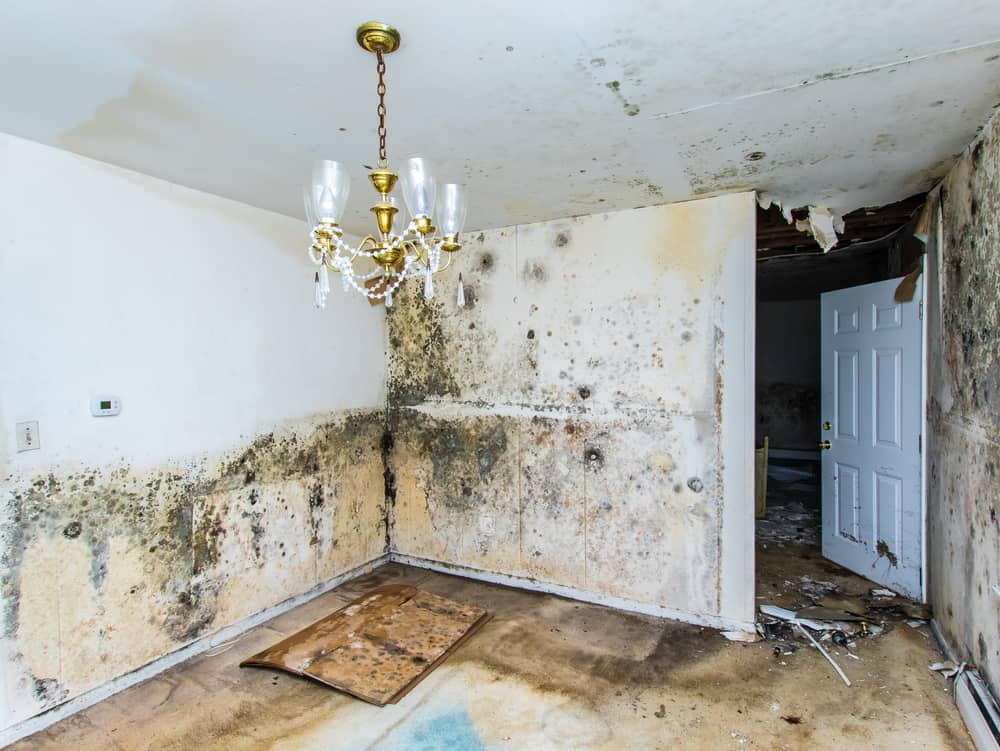
What happens in those first hours matters enormously. Our trained crew arrives with water extraction equipment, air movers, dehumidifiers, moisture monitors, and infrared imaging cameras. The infrared technology is worth understanding: it detects moisture behind walls, under flooring, and inside insulation that looks completely dry to the naked eye. We’ve walked into Nassau County homes two weeks after a storm where the homeowner thought everything was fine — and found significant hidden moisture that was already growing mold inside the wall cavity. By the time that mold becomes visible on the surface, you’re dealing with a much larger remediation project than you would have had with an early assessment.
This is also why the sequence of your post-storm actions matters. Before you start cleaning up, document everything — photograph and video every affected area before moving or discarding anything. Then call your insurance company to report the damage. Then call a restoration company. Do not wait on the restoration call because you’re waiting for the adjuster to visit first. Most policies require prompt mitigation, meaning you have an obligation to prevent further damage. Waiting for an adjuster appointment that’s days away while water sits in your walls is not prompt mitigation, and carriers can use that against you.
We handle insurance coordination directly, which means we work with your adjuster, document the damage properly, and bill the carrier — so you’re not stuck in the middle trying to translate between two sets of professionals while your home is in pieces.
Nassau County Emergency Repair Permits: What Homeowners Need to Know After Storm Damage
One of the less-discussed parts of post-storm recovery in Nassau County is the permit process. Most homeowners assume that emergency repairs — patching a roof, replacing a damaged wall section, addressing a compromised foundation — can happen immediately without paperwork. The reality is more complicated, and getting it wrong can create expensive delays or, in serious cases, require you to undo work that wasn’t properly permitted.
Nassau County requires permits for most structural repairs, including post-storm work that goes beyond immediate protective measures like tarping or boarding up openings. The distinction matters: emergency board-up and tarping to prevent further water intrusion generally doesn’t require a permit and should happen as fast as possible. Actual structural repair — framing replacement, roofing beyond surface patching, foundation work — requires a permit from the Nassau County Building Department before the work begins.
For homeowners in FEMA flood zones, there’s an additional layer. If storm damage to your home exceeds 50 percent of its pre-storm value, FEMA’s Substantial Damage rule applies. This triggers a requirement to elevate the structure to current Base Flood Elevation before rebuilding can proceed. After Sandy, 38,189 structures across Nassau and Suffolk counties met this threshold. It’s a significant regulatory reality that affects what your repair options are and what your insurance will cover.
This is where working with a contractor who knows Nassau County’s regulatory environment makes a real difference. We’ve been navigating these requirements for over 35 years — through Sandy, through Irene, through dozens of nor’easters and unnamed storms that still left significant damage behind. We know when a permit is required, how to get it processed efficiently, and how to document the work in a way that satisfies both the Building Department and your insurance carrier. A contractor who isn’t familiar with Nassau County’s post-storm permit process can inadvertently create delays that stretch a two-week repair into a two-month ordeal.
One more thing worth knowing: under New York law, you have the right to choose your own restoration contractor. Your insurance company cannot require you to use their preferred vendor. If an adjuster or insurance representative suggests otherwise, that’s worth pushing back on.
Hurricane Season on Long Island: The Preparation Steps That Actually Make a Difference
The homeowners who come out of hurricane season in the best shape aren’t the ones who got lucky — they’re the ones who handled the small things before the storm arrived. Flood insurance secured before June 1st. Gutters cleared. Windows protected. A video walkthrough of the home stored somewhere safe. And a restoration company’s number already saved in their phone, not searched for while water is rising.
Nassau County’s storm history — from the 1938 Long Island Express to Sandy to the nor’easters that come through every single winter — makes clear that this isn’t a question of if, it’s a question of when and how prepared you are when it happens.
If you have questions about your specific property, your flood zone, or what a post-storm assessment actually involves, we’ve been answering those questions for Nassau County homeowners since 1991. Save our number now: 516-698-1776. It’s a lot easier to make that call before you need it than after.
Article details:
- Published by:
- First Response Restoration
- Published to:
- Last modified:
- October 22, 2026
Share:
Continue learning: