
Mold Inspection in Williston Park, NY
When Your 90-Year-Old Home Holds Secrets in the Walls

Hear from Our Customers
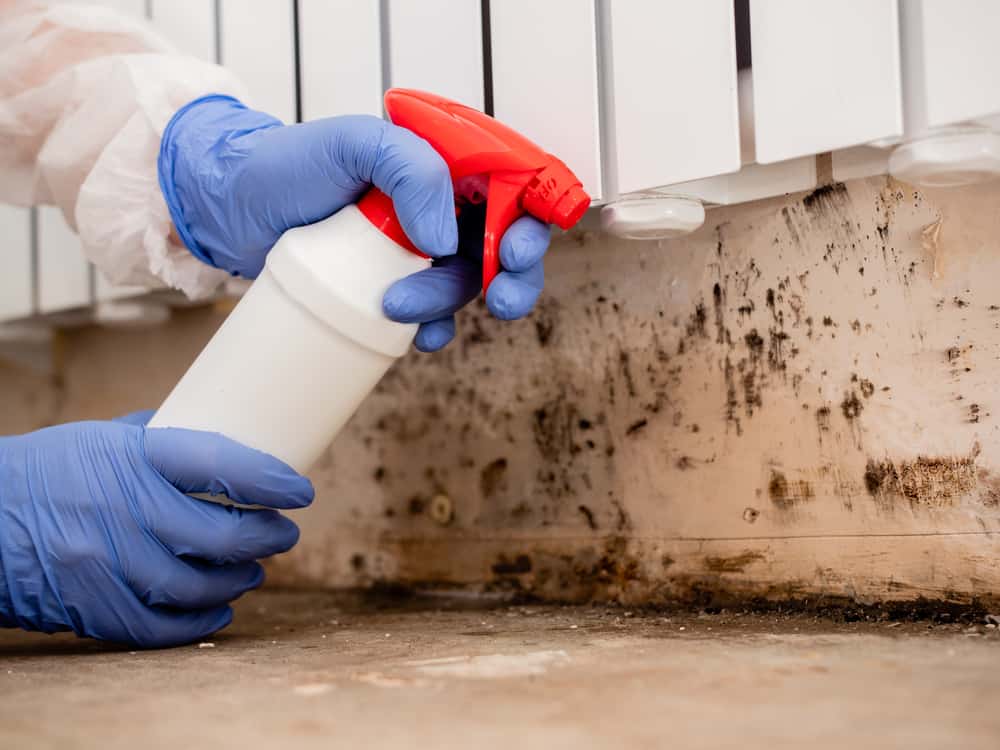
Residential Mold Inspection Williston Park
A mold inspection isn’t just about finding mold. It’s about understanding what’s happening inside your home where moisture is getting in, what’s growing because of it, and what needs to happen next. When you get a thorough assessment, you stop guessing and start making decisions based on real information.
That matters a lot in Williston Park, where more than half of all homes were built in 1939 or earlier. These homes are beautiful the Chatlos Colonials, the Dutch Revivals, the brick-faced two-stories on tree-lined streets but they were never built with modern moisture protection in mind. Original plaster walls, wood-framed basements, and aging rooflines create the exact conditions where mold quietly establishes itself long before anyone notices a smell or a stain.
Nassau County’s naturally high water table makes this worse. When heavy rain overwhelms the aging drainage infrastructure in and around Williston Park, water pushes through foundation walls into basements. If it sits there for more than 24 to 48 hours without proper drying, mold begins. A basement mold inspection in Williston Park isn’t a precaution for a home this age, in this county, it’s a reasonable thing to do after any significant water event.
Mold Inspection Company in Williston Park
We’ve been working on Long Island homes for over three decades. That means the pre-war housing stock throughout Williston Park the original wall cavities, the unfinished basements, the attic knee walls with compressed insulation isn’t something we’re learning about on your property. We’ve been inside these homes since before most of their current owners bought them.
Our owner, Richard Peterson, holds personal NYS Department of Labor licensing in both mold inspection and mold remediation. Every technician on our team is IICRC-certified. Not just the person who answers the phone the person who actually shows up at your door on Hillside Avenue or Willis Avenue or any of the residential streets that make up Williston Park.
We serve Nassau County through a dedicated local line 516-698-1776 and we’re available 24 hours a day, 7 days a week. Because a pipe that bursts at 11 PM in a 1934 Colonial doesn’t wait for Monday morning.
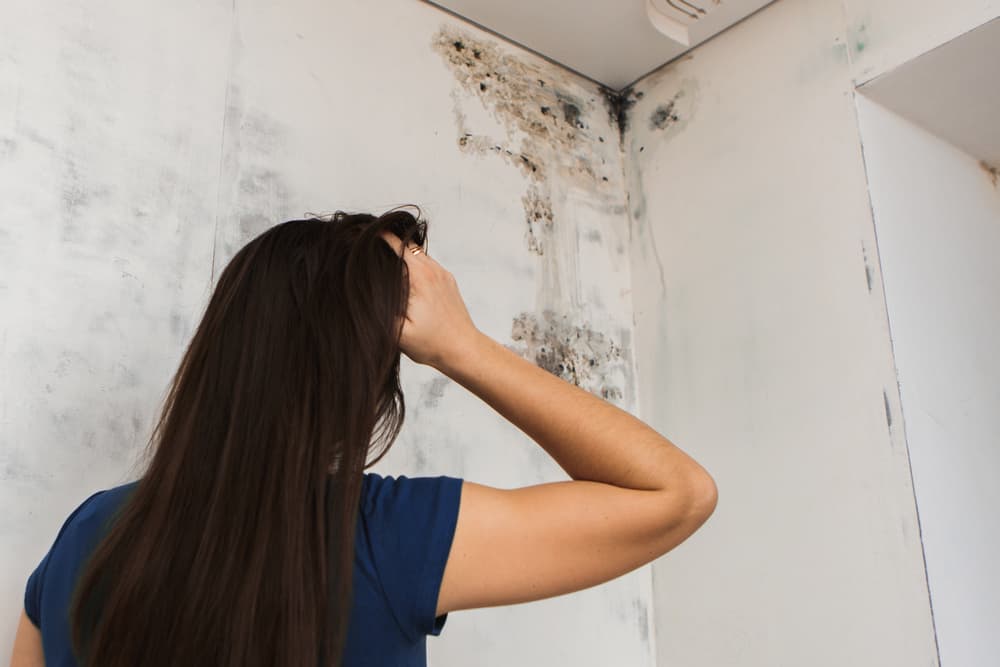
Mold Detection Services in Williston Park
When one of our technicians arrives at your Williston Park home, they’re not doing a visual walk-through and calling it done. The inspection follows a five-point protocol that covers every realistic pathway through which mold develops in a home like yours.
It starts with air testing collecting samples from inside the home and comparing them to outdoor baseline levels. That comparison matters because it establishes whether what’s in your air is elevated above what’s naturally present outside. From there, surface swab samples are taken from any areas of concern and sent to a certified third-party laboratory for species identification and spore count analysis. We measure moisture levels throughout the structure, not just in the obvious spots. Water intrusion points are identified because mold is always a symptom of a moisture source, and without finding the source, any remediation is temporary.
The part that separates our inspection from a basic assessment is the infrared thermal imaging. In a Williston Park home built in the 1920s or 1930s, mold routinely hides behind original plaster walls, under hardwood subfloors, and inside attic knee walls places no eye can reach. Infrared detects the temperature differentials caused by hidden moisture, showing exactly where the problem lives without tearing anything apart. When it’s all done, you receive a written report with lab results, findings, and specific remediation recommendations documentation that holds up with your insurance company, your real estate attorney, and your doctor.
Under New York State law, all paid mold assessment work requires a current NYS DOL Mold Assessor license. We carry that license. That’s not a bonus it’s the legal baseline for any mold inspection company operating in Williston Park.
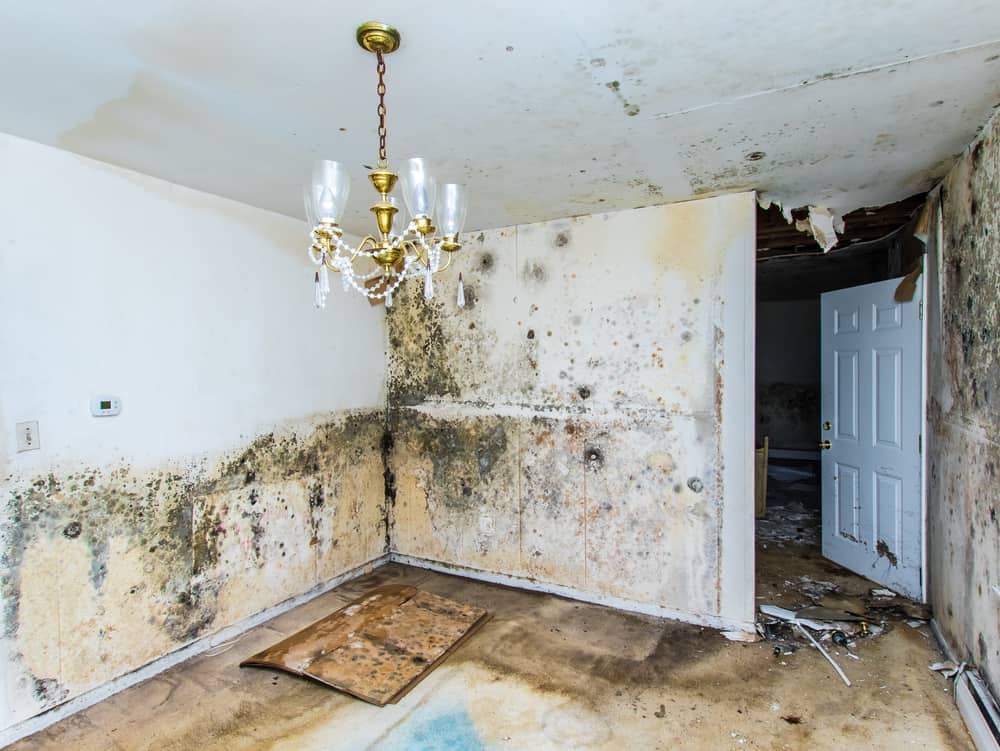
Ready to get started?
Mold Assessment Services Williston Park, NY
The mold inspection service we provide in Williston Park covers both residential and commercial properties. Whether you own a pre-war Colonial on a side street off Hillside Avenue, a multi-family property, or a commercial space along Willis Avenue, our inspection protocol is the same: thorough, technology-assisted, and backed by certified laboratory analysis.
For residential clients, the most common scenarios are basement mold inspection after flooding or chronic moisture intrusion, attic mold inspection in Colonial-style rooflines where ice dams push water under shingles during winter, and indoor air quality testing for mold in homes where occupants are experiencing unexplained respiratory symptoms or allergic reactions. Pre-purchase mold inspection is also a significant part of what we do in Williston Park given that homes here regularly sell for $800,000 or more, buyers investing in a 90-year-old property want certainty before they close.
Every inspection we conduct includes air and surface sampling, moisture measurement, water intrusion assessment, infrared scanning, and a written report with certified lab results. That report is specifically formatted to meet the documentation requirements of insurance companies which matters when the mold is connected to a covered water damage event like a burst pipe or storm flooding. If remediation is needed, we handle that too. You don’t get handed off to a second company with a different interpretation of the findings. The same team that identifies the problem is connected to the team that resolves it.
Do I really need a professional mold inspection in a Williston Park home that looks fine?
The short answer is that mold doesn’t always look like anything. In Williston Park’s older homes most of which were built before 1950 mold commonly grows inside original plaster wall cavities, under subfloors, and in attic spaces where no one looks regularly. A musty smell in the basement, unexplained allergy symptoms that improve when you leave the house, or a recent water event are all reasons to get a professional assessment even when nothing is visibly wrong.
The other factor specific to this area is Nassau County’s high water table. Basements in Williston Park are particularly vulnerable to water intrusion after heavy rain events, and that moisture can remain trapped in wall systems and under flooring for weeks without any visible sign. A professional mold inspection uses air sampling, surface testing, moisture measurement, and infrared scanning to find what a visual check would miss entirely. At the price point of a professional inspection, it’s a reasonable step before assuming everything is fine.
How much does a mold inspection cost in Williston Park, NY?
Professional mold inspections typically range from around $300 to $1,000 or more depending on the size of the home, the number of areas being tested, and what the inspection includes. For a Williston Park home where the median property value is around $830,000 and most homes have multiple floors, a basement, and an attic a comprehensive inspection that covers all of those spaces will generally sit in the mid-to-upper range of that window.
What matters more than the number is what you’re getting for it. A thorough inspection with certified lab analysis, infrared scanning, moisture measurement, and a written report is a different product than a basic visual walk-through with a couple of air samples. In a home this age, in a county with Nassau’s drainage and water table conditions, the comprehensive version is the one that actually tells you something useful. And compared to the cost of advanced mold remediation which can run from $1,500 to $20,000 or more depending on the extent of the problem an inspection that catches something early is not a cost. It’s a hedge.
What's the difference between mold inspection and mold testing in Williston Park?
These terms get used interchangeably, but they’re not the same thing. Mold testing typically refers to the collection of samples air samples, surface swabs that are sent to a laboratory for analysis. Mold inspection is the broader process that includes testing but also covers the physical assessment of the property: identifying moisture sources, measuring humidity levels, scanning for hidden moisture with infrared technology, and documenting findings in a written report.
In a Williston Park home, testing alone tells you what’s in the air. Inspection tells you why it’s there and where it’s coming from. If you only get test results without a full assessment, you may know you have elevated mold spore counts but have no idea what’s driving them or where the source is. For pre-war homes with original construction and aging infrastructure, the full inspection is what actually gives you actionable information not just a number from a lab.
Is mold inspection required before buying a house in Williston Park, NY?
It’s not legally required in New York State, but in a market like Williston Park where homes sell for $800,000 or more and the vast majority of the housing stock predates 1950 it’s one of the smarter things a buyer can do before closing. A general home inspector will flag obvious moisture issues, but they’re not equipped to collect air samples, identify mold species, or use infrared technology to find hidden moisture behind walls. Those are the tools of a certified mold assessor.
If the inspection reveals a problem, that documentation becomes a negotiating tool. A written report from a NYS-licensed mold assessor with certified lab results carries weight in a real estate transaction in a way that a verbal concern from a general inspector does not. And if the inspection comes back clean, you have documented proof of the home’s air quality at the time of purchase which matters if a question arises later. Given the competitiveness of the Williston Park real estate market, having that information before you’re locked into a deal is worth the cost of the inspection.
How do I know if the mold inspector I hire in Williston Park is actually licensed?
Since January 1, 2016, New York State has required all mold assessors and mold remediators to hold a current license issued by the NYS Department of Labor under Article 32 of the NY Labor Law. This applies to any paid mold work inspection, testing, or remediation performed anywhere in the state, including Williston Park. Fines for unlicensed mold work can reach $10,000, and enforcement has increased in recent years.
To verify a license, you can search the NYS DOL’s online license lookup database using the company’s name or the individual assessor’s name. Any legitimate mold inspection company operating in Nassau County should be able to provide their license number without hesitation. Our owner, Richard Peterson, is personally licensed in both mold assessment and mold remediation, and we are fully licensed, bonded, and insured. If a company you’re considering can’t confirm their NYS DOL license on the spot, that’s a reason to keep looking.
Why does attic mold show up so often in Williston Park homes specifically?
Attic mold is one of the most common findings in Williston Park’s pre-war housing stock, and the reasons are pretty specific to how these homes were built and how the local climate affects them. The Colonial and Dutch Colonial rooflines common throughout the village create attic spaces with knee walls and low-pitch sections that don’t ventilate well. When those spaces aren’t properly ventilated, warm humid air from the living space rises, hits the cold roof deck in winter, and creates condensation. Over time, that moisture feeds mold colonies on the roof sheathing and rafters often without any leak or visible water event.
Ice dams are the other major factor. Long Island winters produce the freeze-thaw cycles that cause ice to back up under roofing materials, forcing water into attic spaces through the roof deck. In a home with original or older roofing, those pathways are well-established. An attic mold inspection in Williston Park specifically targets the areas where these conditions concentrate the ridge, the eaves, the knee walls, and the area above bathroom and kitchen exhaust points that may not be vented fully to the exterior. If your home was built before 1950 and hasn’t had a recent attic inspection, it’s worth knowing what’s up there.
Useful Links
Other Services we provide in Williston Park