
Mold Remediation in Eatons Neck, NY
One Road In. No Room for the Wrong Company.
Hear from Our Customers
Certified Mold Remediation in Suffolk County
Living on Eatons Neck means your home is surrounded by water on three sides. That’s part of what makes this peninsula so desirable and part of what makes moisture management a constant reality for every homeowner here. Salt air off Long Island Sound, tidal humidity from Huntington Bay, and the narrow land mass that offers no buffer from any direction these aren’t abstract risk factors. They’re the daily environment your home is sitting in, and they create the exact conditions where mold takes hold and spreads quietly inside walls, under floors, and above ceilings.
When mold remediation is done right, you stop reacting and start breathing easier literally. Your crawl space stops feeding moisture into your living space. Your attic stops harboring the kind of hidden growth that derails a home inspection at the worst possible moment. For a home valued at close to a million dollars or more, a clean clearance report isn’t a formality it’s financial protection.
The homes on Eatons Neck were mostly built in the 1960s, before vapor barriers and moisture-resistant materials were standard. That means the walls, joists, and insulation in your home were never designed for the level of coastal humidity they’ve been absorbing for decades. Professional mold remediation isn’t just about removing what’s visible it’s about addressing what that older construction has been quietly holding onto.
Licensed Mold Remediation Company in Eatons Neck
We’ve been working on Long Island for over three decades. That includes the post-Sandy years, when a 96 mph wind gust hit Eatons Neck one of the highest recorded anywhere on Long Island during that storm and the remediation work that followed in the months and years after. Some of that work was done right. A lot of it wasn’t. The difference shows up today in homes that still have moisture problems hiding behind the walls.
Owner Richard Peterson holds personal New York State licenses in both mold assessment and mold remediation under Article 32 of the NYS Labor Law. Both are verifiable through the state Department of Labor. Every technician on our team is IICRC-certified, which means the people walking into your home have been trained and tested against the industry’s recognized standard not just handed a company shirt.
We also operate an integrated cleaning division, so the job doesn’t stop at remediation. From initial containment through final cleaning, one team handles it from start to finish no handoffs, no coordination headaches, no gaps.
Professional Mold Remediation Process in Eatons Neck
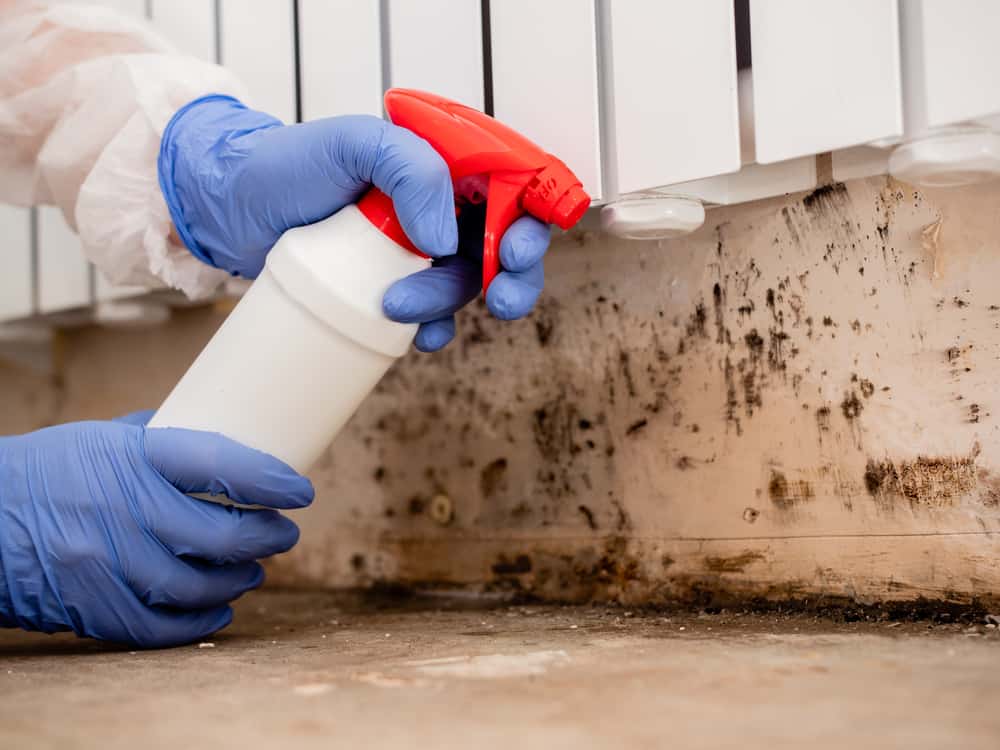
It starts with a thorough assessment not just a visual scan, but moisture mapping that identifies every source and pathway before anything is removed. On a coastal peninsula like Eatons Neck, that step matters more than most places. Removing mold without locating the moisture driving it is how you end up calling a remediation company twice.
Once the source is identified, we contain the affected area to prevent cross-contamination to the rest of the home. Contaminated materials drywall, insulation, framing if needed are removed following the IICRC S520 standard. Any structural work that falls under the Town of Huntington’s building permit requirements is handled within that framework. After removal, affected surfaces are treated with EPA-registered antimicrobial agents, and structural drying equipment is brought in to eliminate residual moisture from the building materials themselves.
The final step is post-remediation verification independent air quality testing that confirms mold spore counts have returned to normal levels. You receive a clearance report in a format that holds up with real estate attorneys, insurance adjusters, and home inspectors. That documentation matters enormously in a market where a single mold finding during a home inspection can stall or kill a transaction on a property worth close to seven figures. Our integrated cleaning team then handles the final cleanup, so the home is left in move-in condition not mid-job condition.
Ready to get started?
Attic and Crawl Space Mold Remediation in Eatons Neck
The mold calls that come in from Eatons Neck tend to follow a predictable pattern. Crawl space mold is common in the mid-century homes along the peninsula built without encapsulation, sitting on ground that stays damp from the surrounding water table year-round. Attic mold shows up in homes where the insulation and ventilation systems weren’t designed for the temperature swings between Long Island Sound air and a heated interior. Basement mold follows heavy rain events and the kind of nor’easters that push water against foundation walls that were never waterproofed to begin with.
Black mold remediation requires enhanced containment protocols and more rigorous post-remediation verification than surface mold and it’s not uncommon in homes that experienced storm surge or prolonged water intrusion during Sandy and were never fully dried out. If your home has had any water event in the past decade and the remediation work isn’t documented, an assessment is worth doing before the problem surfaces during a sale.
Every job we perform includes moisture source identification, full containment, material removal to the IICRC S520 standard, antimicrobial treatment, structural drying, and a post-remediation clearance report. Insurance documentation assistance is also part of the process because navigating a mold claim on a high-value Suffolk County property is complicated, and having someone who has done it for 31 years on your side makes a real difference.
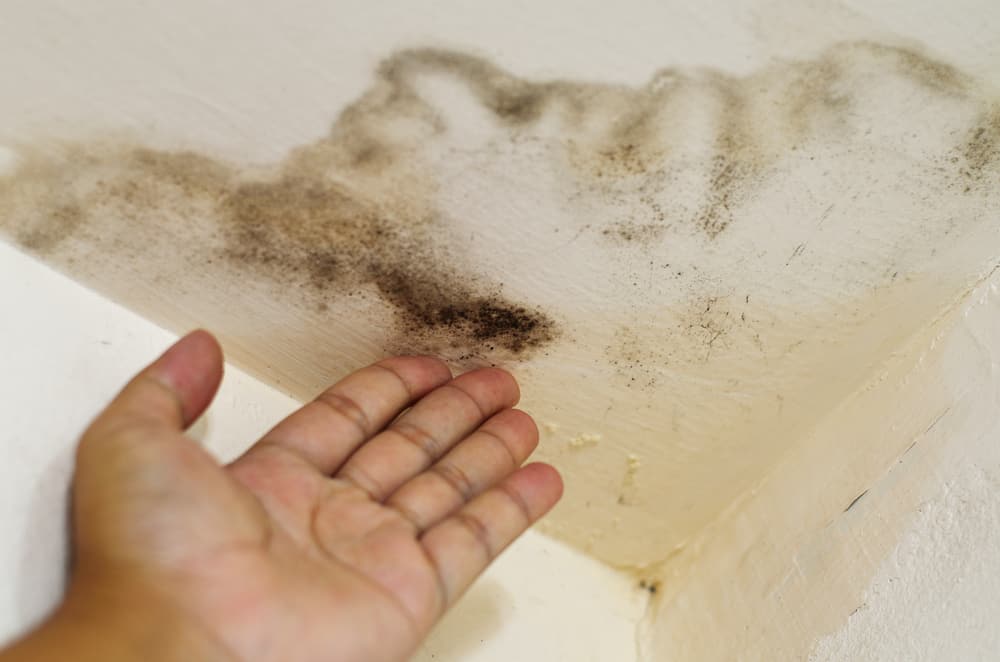
Does homeowner's insurance cover mold remediation in Eatons Neck, NY?
It depends on the cause, not just the mold itself. Most standard homeowner’s insurance policies in New York will cover mold remediation when it’s the direct result of a covered event a burst pipe, storm damage, or sudden water intrusion. What they typically won’t cover is mold that developed over time due to ongoing moisture issues or deferred maintenance. That distinction matters a lot for Eatons Neck homeowners, where the line between storm-related damage and long-term coastal moisture exposure can be genuinely blurry.
The key is documentation. If your home experienced water intrusion during a named storm including Sandy and you have records of what happened and when, that documentation supports a claim. If the mold appears to be the result of gradual moisture accumulation with no clear triggering event, coverage becomes less certain. We help homeowners build the documentation package that gives a claim its best chance scope of work, cause assessment, and remediation records in the format insurance adjusters actually need.
How much does mold remediation typically cost for homes in Eatons Neck?
For most residential mold remediation jobs, you’re looking at a range of roughly $1,200 to $3,800 for standard surface mold affecting a contained area. Attic mold remediation one of the more common issues in the 1960s-era homes on the Eatons Neck peninsula typically runs $1,500 to $9,000 depending on the extent of growth and whether structural materials need to come out. Crawl space remediation generally falls between $500 and $6,000, with encapsulation pushing the higher end of that range.
Where costs escalate is when mold has reached structural framing, or when black mold remediation requires enhanced containment and more intensive removal protocols. For a home valued at close to a million dollars or more, the remediation cost is almost always a fraction of what a mold finding costs you during a real estate transaction either in price reduction, deal collapse, or legal liability. The clearance report you receive at the end of the job is part of what you’re paying for, and in this market, it’s worth every dollar.
What's the difference between mold remediation and mold removal in Eatons Neck, NY?
Mold removal is a term that gets used loosely and sometimes misleadingly. You can’t remove every mold spore from a home, because mold spores exist naturally in the air both inside and outside. What you can do is bring indoor mold levels back to normal, safe concentrations and eliminate the active growth that’s causing the problem. That’s what mold remediation actually means it’s a controlled, standard-driven process, not just scrubbing visible mold off a surface.
The distinction matters practically. A company that offers “mold removal” without addressing the moisture source, without containing the work area, and without post-remediation air quality testing is not doing remediation they’re doing cleanup. On a coastal peninsula like Eatons Neck, where ambient humidity never fully lets up, mold that’s cleaned without correcting the underlying moisture will return. Remediation done to the IICRC S520 standard addresses the source, removes the growth, treats the affected materials, and verifies the result with independent testing.
How do I verify that a mold remediation contractor is licensed in New York State?
New York State’s Article 32 of the Labor Law requires any person performing mold inspection, assessment, or remediation to hold a valid state-issued license. This law has been in effect since January 1, 2016, and it was enacted specifically because the mold remediation market had become saturated with unlicensed operators many of whom entered Long Island after Hurricane Sandy. Hiring an unlicensed contractor puts you at real risk: the work may not be legally enforceable, it may not satisfy your insurance company’s documentation requirements, and you may have no legal recourse if the job is done incorrectly.
To verify a contractor’s license, go to the New York State Department of Labor website and use the license lookup tool. You’ll need the contractor’s name or license number. Richard Peterson, owner of First Response Restoration and Cleaning Inc., holds personal NYS licenses in both mold assessment and mold remediation both verifiable through that system. When you’re protecting a home worth close to seven figures on Eatons Neck, verifying a license before signing a contract takes two minutes and eliminates a significant category of risk.
Can mold in my crawl space spread to the rest of my Eatons Neck home?
Yes and in the homes on Eatons Neck, this is one of the more common ways a mold problem grows before a homeowner knows it’s there. Crawl spaces in the mid-century homes on this peninsula were typically built without encapsulation, which means they’re in direct contact with ground moisture. That moisture evaporates upward a process called the stack effect carrying mold spores with it into the floor joists, subfloor, and eventually into the living space above.
Because the peninsula sits between multiple bodies of water, the ground moisture under these homes stays elevated year-round. A crawl space that shows surface mold in the spring may have been accumulating moisture-driven conditions since the previous fall. Left untreated, that growth migrates. By the time you smell something or notice a stain on the floor above, the mold has typically been active for a while. Crawl space mold remediation in Eatons Neck usually involves removing contaminated materials, treating the affected framing, and depending on the extent encapsulating the space to interrupt the moisture pathway permanently.
What should I do if mold is found during a home inspection in Eatons Neck?
First, don’t panic but don’t ignore it either. A mold finding during a home inspection on Eatons Neck is not uncommon given the age of the housing stock and the coastal environment. What matters most is how you respond. If you’re the seller, you need a licensed remediation company to assess the scope, perform the remediation, and produce a clearance report ideally before the deal stalls or the buyer walks. If you’re the buyer, you want that same documentation in hand before you close, not after.
The clearance report is the critical piece. It’s the independent air quality test result that confirms mold spore counts have returned to normal levels after remediation is complete. Without it, a buyer’s attorney has no objective basis to confirm the problem was resolved and in a real estate market where homes on this peninsula routinely transact above $900,000, that ambiguity creates real legal and financial exposure for both sides. We provide post-remediation verification as a standard step, and the documentation we produce is formatted to satisfy the requirements of real estate attorneys, insurance adjusters, and home inspectors operating in Suffolk County.
Useful Links
Other Services we provide in Eatons Neck