Sewage Cleanup Safety: Why DIY Is Dangerous
Sewage in your basement isn't just a mess—it's a health hazard. Here's what you need to know before touching anything.
Share:
Summary:
If you’ve got sewage backing up into your basement, the last thing you want to do is read a long article. You want it gone. That’s understandable. But before you reach for the shop vacuum or a bottle of bleach, there’s something you need to know: sewage backup is not a cleaning problem. It’s a contamination problem—and treating it like the former is how people end up sick, stuck with hidden mold, and facing repair bills that dwarf what professional cleanup would have cost. Here’s what’s actually going on when sewage enters your home, and why it demands a very different response than most people expect.
Why Sewage Cleanup Is Classified as a Biohazard
Sewage water isn’t just unpleasant—it’s categorized as Class 3, or “black water,” under the industry standard that governs water damage restoration. That classification exists because raw sewage carries over 50 species of pathogenic bacteria, along with viruses like Hepatitis A and Norovirus, parasites like Giardia, and toxic byproducts that can cause serious illness through skin contact, inhalation, or accidental ingestion.
What makes this especially dangerous is that contaminated water doesn’t always look contaminated. Storm surge that pushed into a south shore home during a nor’easter can look completely clear—but if it’s carrying drainage from the sewer systems, it’s just as hazardous as the murky backup coming up through a floor drain in Levittown or Hicksville.
The health risks are real and well-documented. Direct exposure to Class 3 water carries a high probability of illness requiring medical attention. Children and pets face even greater risk because they’re closer to contaminated surfaces and more likely to have hand-to-mouth contact. This isn’t a worst-case scenario—it’s the baseline reality of what sewage backup brings into a home.
What Happens When You Try to Clean Up Sewage Yourself
The most common DIY response to a sewage backup involves some combination of a shop vacuum, paper towels, and bleach. Each of these creates its own problem—and together, they can turn a contained emergency into a whole-house health hazard.
When you run a shop vacuum over sewage-contaminated water, you’re not removing the contamination. You’re aerosolizing it. The machine pulls pathogen-laden water through its motor and exhaust, launching microscopic particles—including endotoxins released by dying bacteria—into the air throughout your home. Those particles don’t settle quickly. They circulate through your HVAC system, land on furniture, and get inhaled by everyone in the house. What started as a basement problem becomes an air quality problem.
Bleach has a similar limitation. It works on hard, non-porous surfaces, but it cannot penetrate drywall, wood framing, carpet padding, or insulation. Sewage water wicks into these materials almost immediately on contact. When you spray bleach on the surface of a contaminated wall, you’re treating the paint—not the problem. The pathogen colonies living inside the wall continue to grow, and within 24 to 48 hours, mold begins to develop in the same moisture-rich environment.
There’s also the issue of spread. Without proper containment—negative air pressure, physical barriers between affected and clean areas—moving through a contaminated space on your own tracks bacteria and viruses into rooms that weren’t affected. A backup confined to a finished basement can, through a DIY cleanup attempt, become a contamination event that involves the entire first floor.
Nassau County’s housing stock makes this particularly relevant. Most homes here were built during the post-war boom of the 1950s and 1960s, which means they have older construction with more porous materials, more exposed wood framing, and more aged insulation that absorbs moisture quickly. A sewage event in a Hicksville split-level or a Massapequa ranch home from that era is not the same as a backup in a newer build with modern materials. The contamination goes deeper, faster.
Emergency Water Damage From Sewage Gets Worse the Longer You Wait
There’s a timeline that matters here, and most homeowners don’t know about it until it’s too late. A water leak that starts as clean water can degrade to full biological contamination within 72 hours as bacteria multiply in standing moisture. A sewage backup arrives at that contamination level immediately—and from that point forward, the clock is running in the wrong direction.
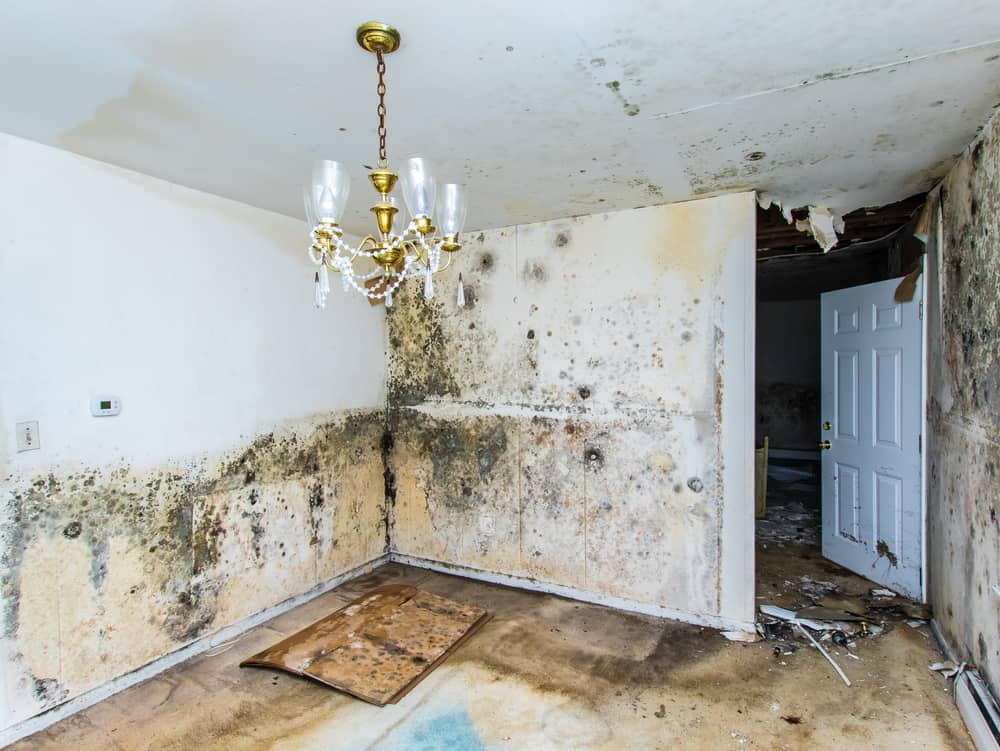
Within the first 24 to 48 hours, mold can begin colonizing any wet porous material—carpet, drywall, wood subfloor, ceiling tile. Mold doesn’t need much: moisture, an organic surface, and time. A sewage backup provides all three in abundance. Once mold takes hold, you’re no longer dealing with a water damage event. You’re dealing with a remediation project that involves additional testing, additional removal, and additional cost.
This is why the idea of “waiting to see if it dries out” is one of the most expensive decisions a homeowner can make. The contamination doesn’t dry out—it just becomes harder to see. The moisture wicks further into structural materials. The mold spreads. And the scope of what needs to be removed and replaced grows with every passing hour.
The timing issue is especially acute in Nassau County’s south shore communities. In areas like Freeport, Oceanside, and Baldwin—where storm surge from the Great South Bay can push Class 3 water into homes during a nor’easter—the window between the event and professional help is often compressed by road conditions, power outages, and the sheer volume of simultaneous calls. Every hour matters. In June 2024, a 42-inch sewer main collapsed in Baldwin, overrunning a local creek with sewage for three weeks. That kind of infrastructure failure doesn’t just affect one home—it affects entire blocks, and the homeowners who called for professional help fastest were the ones who avoided the worst of the secondary damage.
The practical takeaway is simple: if sewage has entered your home, the right move is to get everyone out of the affected area, avoid touching anything, and call a certified professional immediately. Not tomorrow. Not after you’ve tried to clean it up yourself.
Emergency Water Restoration for Sewage Backups: What Professional Cleanup Actually Looks Like
Professional sewage cleanup looks nothing like what most people imagine. It’s not a crew with mops and industrial fans. It’s a structured, protocol-driven process governed by the IICRC S500 standard—the same framework used by courts and insurance companies to define what adequate remediation looks like.
The process starts with containment. Before anything is extracted or removed, the affected area is isolated using physical barriers and negative air pressure to prevent cross-contamination. From that point, every step—extraction, material removal, antimicrobial treatment, structural drying, air scrubbing—follows a documented sequence designed to eliminate biological hazards, not just visible moisture.
What matters most for homeowners is understanding that professional remediation produces a documented, verifiable result. Post-remediation testing confirms that contamination levels have been reduced to safe thresholds before reconstruction begins. That documentation matters for insurance claims, for resale value, and for your own peace of mind.
Emergency Water Damage Repair: What Gets Removed and Why
One of the hardest conversations in sewage remediation is telling a homeowner that their carpet, drywall, and insulation need to come out. It feels extreme. But under IICRC S500 protocols, all porous materials that contacted Class 3 water must be removed—not cleaned, not sanitized, removed. The reason is straightforward: no surface treatment can reach the contamination that has already wicked into the material’s interior.
This means carpet and carpet padding go. Drywall is cut back to at least 12 inches above the waterline. Insulation is bagged and disposed of. Wood subfloor is assessed for structural integrity and, if contaminated, replaced. These aren’t arbitrary decisions—they’re the minimum required to eliminate active pathogen colonies and prevent the mold growth that follows incomplete remediation.
After the affected materials are removed, all remaining surfaces are treated with EPA-registered antimicrobial agents. HEPA air scrubbers run continuously during this phase to capture airborne contaminants. Industrial dehumidifiers and air movers complete the drying process, with moisture readings taken throughout to confirm that structural materials have reached acceptable levels before anything is rebuilt.
This process takes time—typically several days from initial response to clearance testing—but it’s the only way to know the job is actually done. A surface that looks clean and smells clean after a sewage event is not necessarily safe. The testing is what tells you whether it’s safe.
For Nassau County homeowners dealing with the aftermath of a backup in an older home—the kind of 1950s or 1960s construction that makes up a large portion of the housing stock in communities like Bethpage, Valley Stream, or Rockville Centre—the removal phase often uncovers secondary issues: corroded framing, decades-old insulation that was already compromised, subflooring that had pre-existing moisture damage. A thorough professional assessment catches these things. A DIY cleanup doesn’t.
Nassau County Sewage Cleanup FAQs: What Homeowners Ask Most
**Does homeowners insurance cover sewage backup in Nassau County?**
This is probably the question we hear most, and the honest answer is: it depends on your policy—and many homeowners in Nassau County are surprised to find out they’re not covered. Standard HO-3 and HO-5 policies in New York typically exclude sewage backup as a covered peril unless you’ve added a specific sewer backup endorsement, sometimes called a rider. A lot of homeowners don’t realize this gap exists until they’re standing in a contaminated basement. If you’re not sure what your policy includes, now is the time to check—before you need it. When you do have coverage, we handle insurance billing directly, and we cover up to $500 of your deductible.
**Can I use bleach to clean up sewage backup?**
Bleach is not a substitute for professional remediation. It works on hard, non-porous surfaces under controlled conditions, but it cannot reach the contamination inside drywall, carpet padding, or wood framing—and those are exactly the materials that absorb sewage water fastest. Using bleach on a contaminated surface gives you the appearance of clean without the reality of it. The pathogens are still there. The mold is still coming.
**How quickly does mold grow after a sewage backup?**
Mold can begin developing within 24 to 48 hours of a sewage event if moisture isn’t fully extracted and the area isn’t properly dried. In Nassau County’s older housing stock—where many homes have original wood framing, plaster walls, and aged insulation—moisture is absorbed quickly and held longer, which accelerates the mold timeline. This is one of the main reasons response time matters so much. The faster we begin professional extraction, the smaller the mold risk.
**What should I do immediately after a sewage backup?**
Get everyone—including pets—out of the affected area. Don’t run fans, don’t use a shop vacuum, and don’t try to mop anything up. Turn off the HVAC if you can do so safely, since it can spread airborne contaminants through the ductwork. Then call us. The less you disturb the contaminated area before we arrive, the better the outcome.
**How long does professional sewage cleanup take?**
It depends on the scope of the damage, but most residential sewage cleanup projects in Nassau County take between three and seven days from initial response through clearance testing. Larger losses—or events that involved multiple floors, finished basements, or significant structural material removal—can take longer. We give you a clear timeline after the initial assessment so you know what to expect.
Who to Call for Sewage Cleanup in Nassau County
Sewage backup is one of those situations where the wrong first move can cost you far more than the right one. The contamination is real, the health risks are documented, and the window to act before secondary damage compounds the problem is short. Nassau County’s aging infrastructure—most of it built in the same post-war decades as the homes it runs beneath—means backups are not rare events here. They’re a predictable consequence of pipes that are 60 to 70 years old.
If you’re dealing with a backup right now, or you want to know exactly what a professional response looks like before you need one, we’ve been handling sewage cleanup and water damage restoration on Long Island since 1991. Every technician is IICRC-certified, response time is guaranteed within 30 to 60 minutes, and we’re available every hour of every day—because sewage doesn’t wait for business hours. Reach our team directly at 516-698-1776.
Article details:
- Published by:
- First Response Restoration
- Published to:
- Last modified:
- October 9, 2026
Share:
Continue learning: