Water Mitigation Process: Emergency to Full Restoration
The water mitigation process can save your Nassau County home from catastrophic damage. Learn what happens from the emergency call through final restoration and how to choose qualified contractors.
Share:
Summary:
You’re standing in your basement watching water creep across the floor. Or maybe you just discovered a ceiling stain that wasn’t there yesterday. Either way, you’re asking the same question every Nassau County homeowner asks: what happens next?
The water mitigation process is what stands between manageable damage and a complete disaster. It’s the immediate response that stops water from destroying your home’s structure, your belongings, and your peace of mind. But most homeowners don’t know what mitigation actually involves, how it differs from restoration, or why those first 24 hours determine everything that follows. Here’s what you need to know when water threatens your home.
What Is Water Mitigation and Why It Matters
Water mitigation is the emergency response that prevents water damage from getting worse. It’s not about fixing what’s broken or rebuilding what’s ruined. It’s about stopping the destruction before it spreads.
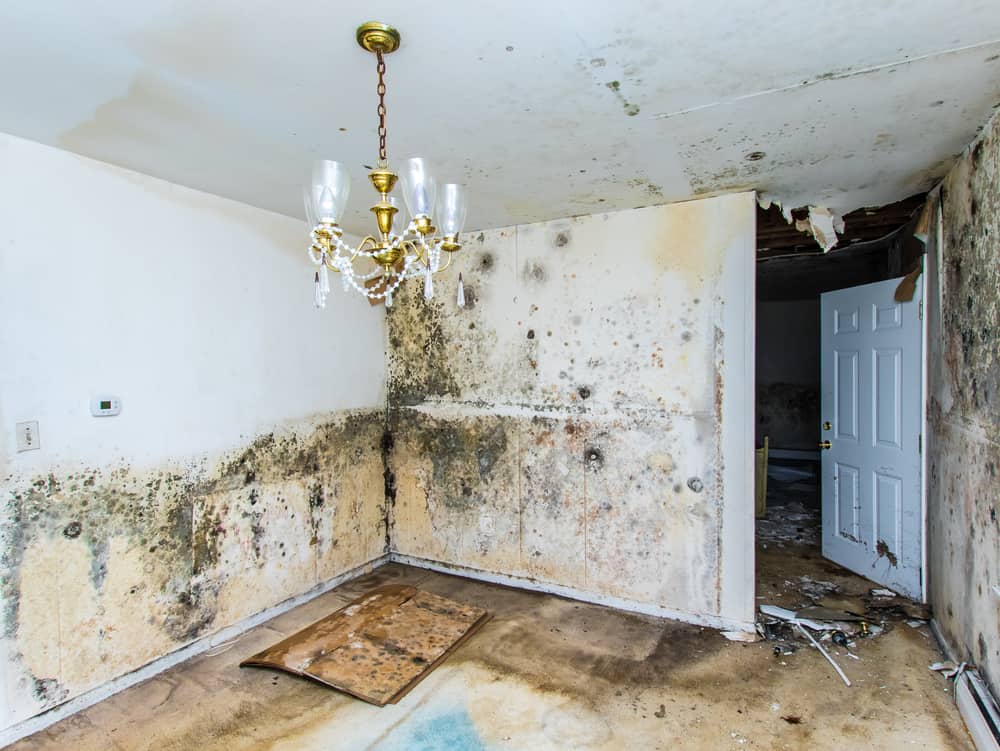
Think of it this way: mitigation is the tourniquet, water damage restoration is the surgery. When water enters your home, every minute counts. Water doesn’t stay put. It soaks into drywall within minutes, compromises flooring within hours, and creates conditions for mold growth within a day or two.
The mitigation process focuses on three things: stopping the water source, removing standing water, and drying everything out completely. That’s it. No reconstruction, no painting, no replacing cabinets. Those come later, during restoration. Right now, the goal is damage control.
The Water Mitigation Process Step by Step
Professional water mitigation follows a specific sequence. We don’t just show up with fans and hope for the best. There’s a system.
First comes the emergency call and initial assessment. A certified technician arrives and evaluates what you’re dealing with. We identify the water source, determine the category of water contamination, and assess how far the damage has spread. This isn’t guesswork. We use moisture meters, thermal imaging cameras, and other diagnostic tools to find water you can’t see behind walls or under flooring.
Next is source control. If water is still flowing, it has to stop. That might mean shutting off a valve, patching a roof, or repairing a broken pipe. You can’t dry out a space if water keeps entering it.
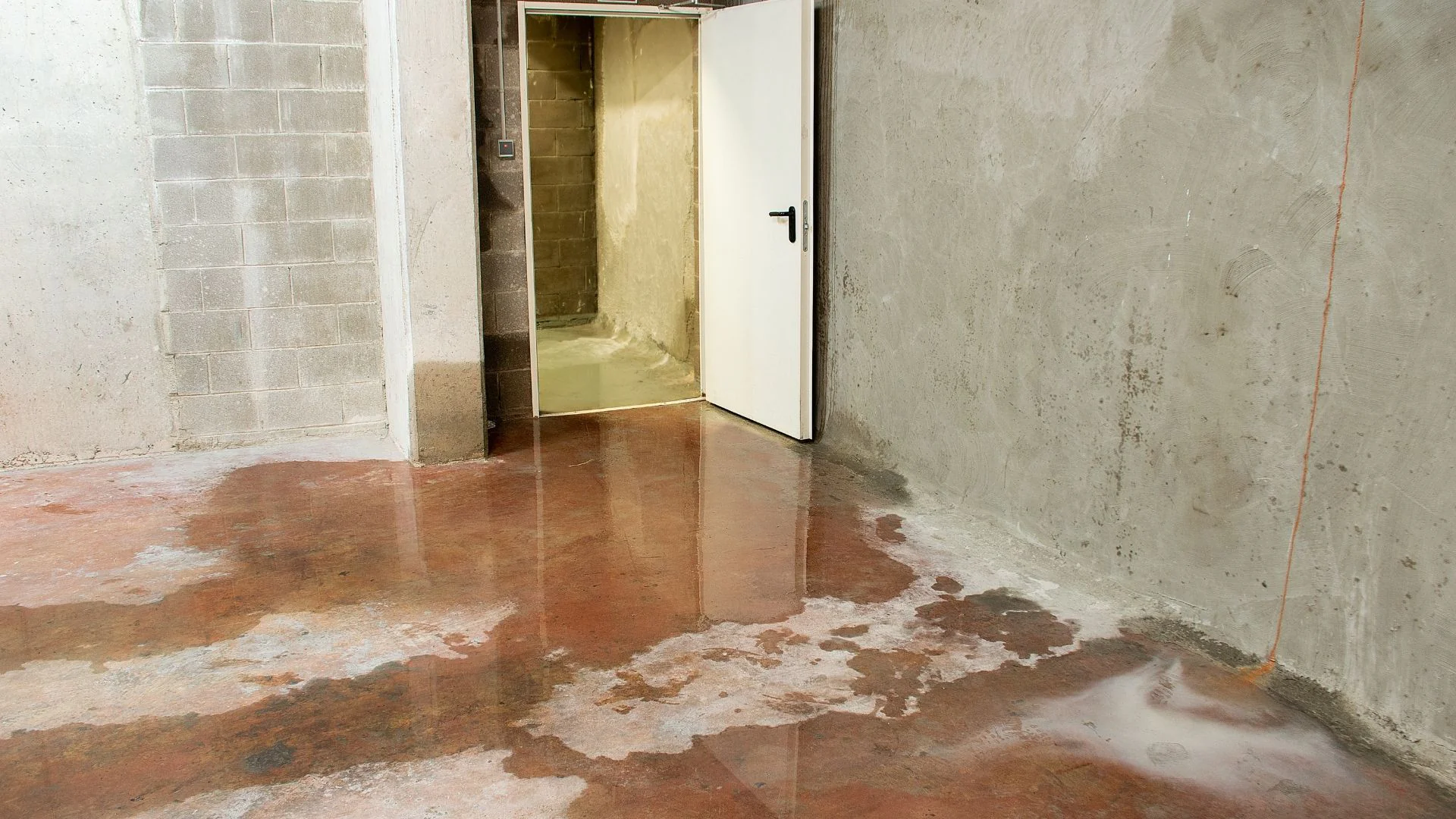
Then comes water extraction. Industrial pumps and vacuums remove standing water from your property. The faster this happens, the less damage occurs. Hundreds or even thousands of gallons might need to be extracted, depending on the situation.
After extraction, the drying phase begins. This is where most homeowners underestimate what’s required. It’s not enough to dry visible surfaces. Water hides inside walls, beneath flooring, and within structural materials. Professional-grade air movers and commercial dehumidifiers run continuously, sometimes for days, to pull moisture from materials and bring them back to normal levels. Our technicians monitor progress with moisture readings and adjust equipment as needed.
Finally, there’s cleaning and sanitization. Depending on the water source, affected areas may need disinfection to eliminate bacteria and prevent health risks. Materials that can’t be salvaged get removed. Everything that remains gets treated to prevent mold growth.
The entire mitigation process prepares your home for restoration. Once everything is dry, clean, and stable, reconstruction can begin safely.
Water Mitigation vs Restoration: Understanding the Difference
Homeowners often use these terms interchangeably, but they’re not the same thing. Mitigation and restoration happen in sequence, and understanding the difference matters for insurance claims and expectations.
Mitigation is emergency response. It’s what happens in the first hours and days after water damage occurs. The focus is preventing further loss. We extract water, set up drying equipment, remove unsalvageable materials, and stabilize your property. Mitigation doesn’t fix anything permanently. It stops the bleeding.
Restoration is the rebuild. Once mitigation is complete and your home is dry, restoration begins. This phase involves repairing or replacing damaged structures, installing new drywall, repainting, replacing flooring, and returning your property to its pre-loss condition. Restoration can take weeks or even months, depending on the extent of damage.
Insurance companies typically handle these phases differently. Mitigation costs are usually approved quickly because delays cause additional damage. Restoration costs require more documentation and approval. We handle both phases, which simplifies the process. You work with one team from emergency response through final repairs instead of coordinating multiple contractors.
Knowing this distinction helps you communicate with your insurance adjuster and understand what’s happening at each stage. When we talk about “mitigation services,” we mean the emergency work. When we discuss “restoration,” we mean the repairs that follow.
Flood vs Water Damage: What Nassau County Homeowners Need to Know
This distinction confuses more homeowners than almost anything else about water damage. It’s not just semantics. The difference between flood damage and water damage determines whether your insurance claim gets approved or denied.
Water damage refers to water that originates inside your home or from a sudden, accidental event. A burst pipe, a leaking water heater, an overflowing washing machine, or rain entering through a damaged roof all qualify as water damage. Your standard homeowners insurance policy typically covers this type of damage.
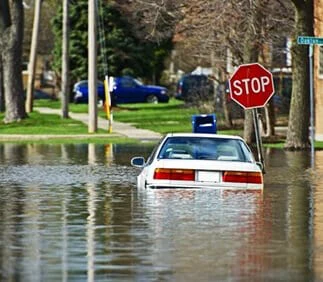
Flood damage is different. Flooding happens when water comes from outside, covers normally dry ground, and affects multiple properties. Storm surge, overflowing rivers, heavy rainfall that accumulates on the ground and enters your basement, and similar events qualify as flooding. Standard homeowners insurance does not cover flood damage. You need separate flood insurance.
Here’s where it gets tricky for Nassau County residents. Over 300,000 people in Nassau County live in flood zones. Coastal storms, nor’easters, and hurricanes create both types of damage simultaneously. If a storm damages your roof and rain enters your home, that’s water damage. If the same storm causes storm surge that floods your first floor from the ground up, that’s flood damage. Different policies, different coverage.
How Water Damage Restoration Repair Contractors Handle Insurance
Navigating insurance claims during a water emergency adds stress to an already difficult situation. Qualified water damage restoration repair contractors do more than extract water and dry your home. We document everything in ways that support your insurance claim.
We photograph damage before, during, and after mitigation. We take moisture readings and record them. We create detailed estimates that break down labor, materials, and equipment costs. We communicate directly with insurance adjusters and provide the documentation adjusters need to process claims efficiently.
This matters because insurance companies require proof. They need to see that damage was sudden and accidental, not the result of long-term neglect. They need documentation showing the extent of damage and the work required to address it. Contractors experienced in insurance work know what adjusters look for and how to present information clearly.
We offer direct insurance billing. You pay your deductible, and we handle payment directly with your insurance carrier. This eliminates the stress of paying thousands upfront and waiting for reimbursement.
One important point: you have the legal right to choose your own restoration contractor. Insurance companies may recommend preferred vendors, but the decision is yours. Some homeowners prefer working with local, independent contractors who prioritize their needs over insurance company preferences. Others are comfortable with insurance-recommended vendors. Either way, the choice belongs to you.
Just make sure whoever you hire is properly licensed, insured, and certified. Verify their credentials before work begins. Check for IICRC certification, which indicates technicians follow industry standards. Confirm they carry adequate liability insurance. Ask for references and read reviews. These steps protect you if something goes wrong.
Choosing a Contractor for Water Damage Repair in Nassau County
Not all restoration companies operate the same way. When water is actively damaging your home, you don’t have time to research extensively. But you also can’t afford to hire the wrong contractor.
Start with licensing and certification. In New York, restoration contractors should carry proper business licenses and insurance. IICRC certification indicates technicians have received formal training in water damage restoration, mold remediation, and related services. Companies that invest in ongoing training and certification tend to deliver better results.
Response time matters significantly. Water damage worsens by the hour. A contractor who can arrive within an hour or two of your call will minimize damage compared to one who can’t reach you until tomorrow. Ask about their emergency response capabilities and whether they offer true 24/7 service.
Look for companies that handle both mitigation and restoration. Working with one team from start to finish simplifies communication, keeps your project on track, and ensures continuity. You won’t have to explain your situation multiple times or coordinate between different contractors.
Experience with Nassau County’s specific challenges is valuable. Contractors familiar with coastal flooding, aging infrastructure, and local building codes bring knowledge that out-of-area companies lack. We understand how salt water affects building materials differently than fresh water. We know which neighborhoods face recurring drainage issues. We’ve worked with local insurance adjusters before.
Ask about their equipment and processes. Professional water mitigation requires industrial-grade pumps, air movers, and dehumidifiers. Thermal imaging cameras and moisture meters help detect hidden water. Companies that own this equipment and use it on every job deliver more thorough results than those relying on basic tools.
Finally, evaluate their communication and transparency. A good contractor explains what they’re doing and why, provides written estimates before work begins, and keeps you informed throughout the process. They answer questions clearly and don’t pressure you into unnecessary services. If something feels off during your initial interaction, trust that instinct.
Nassau County homeowners dealing with water damage need contractors who understand the urgency, have the right tools and training, and can navigate insurance claims effectively. Take time to verify credentials even when you’re under pressure. The few extra minutes spent choosing the right contractor can save thousands in the long run.
Protecting Your Nassau County Home Through Proper Water Mitigation
Water damage creates stress, disruption, and financial pressure. But understanding the mitigation process gives you control during an otherwise chaotic situation.
Remember the key points: mitigation stops damage from spreading, restoration rebuilds what was damaged. Flood damage and water damage aren’t the same thing, and your insurance coverage reflects that difference. You have the right to choose your own contractor, and that choice matters. Fast response, proper equipment, certified technicians, and thorough documentation make the difference between a home that’s truly restored and one that develops problems months later.
Nassau County’s coastal location, aging infrastructure, and flood-prone areas create unique challenges. Homeowners here face water damage risks that require experienced, responsive professionals who understand local conditions and insurance requirements.
When water threatens your home, every hour counts. Having a plan before emergency strikes means you’re not scrambling to find help when water is already spreading. We’ve served Long Island homeowners since 1991 with complete water mitigation and restoration services, direct insurance billing, and the certified expertise Nassau County residents need when water damage occurs.
Article details:
- Published by:
- First Response Restoration
- Published to:
- Last modified:
- October 1, 2026
Share:
Continue learning: